Everything you need to know before you sprint with Colab.
If you’re serious about leaving with proof, this explains how the sprint works, why there’s tuition, what people actually leave with, and how to know if this room is for you.
- 8-week live sprint to turn your grind into something real.
- Trade months of guessing for 8 weeks of pressure, real rooms, and proof that gets replies.
You come in with one real target. The sprint turns it into proof.
- Week 0 to 1: lock the goal and define what counts as proof.
- Weeks 2 to 6: build, ship, get corrected, repeat.
- Weeks 7 to 8: tighten everything into something you can actually show.
This is not passive content. Your work gets seen.
You are not paying for content. You are paying for leverage.
- compression instead of months of guessing
- real humans reviewing your work
- pressure and correction instead of passive learning
- a serious room with standards
- proof that compounds after the sprint
The point is simple: your work gets harder to ignore.
You can. The problem is most people drift.
- scattered projects
- weak accountability
- no serious review
- too much time wasted
Colab compresses that into a tighter, more serious sprint.
Most programs give you content, advice, or a track. Colab is different because it is:
- live
- selective
- proof-first
- built around weekly output
- driven by review and correction
A course gives information. Colab pushes work until it becomes real.
A few receipts before you keep going.


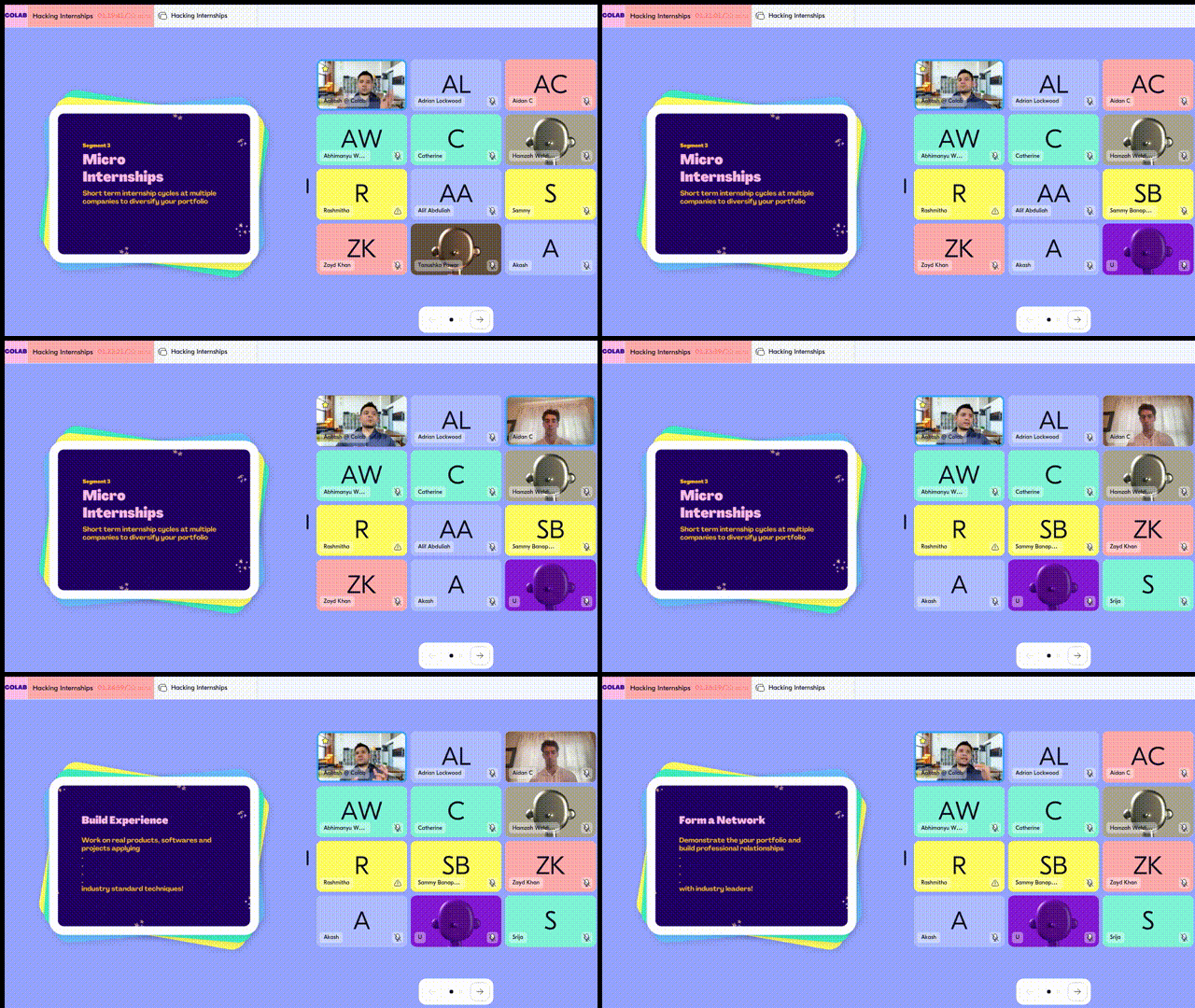
Fellows in live standup walking through shipped work.
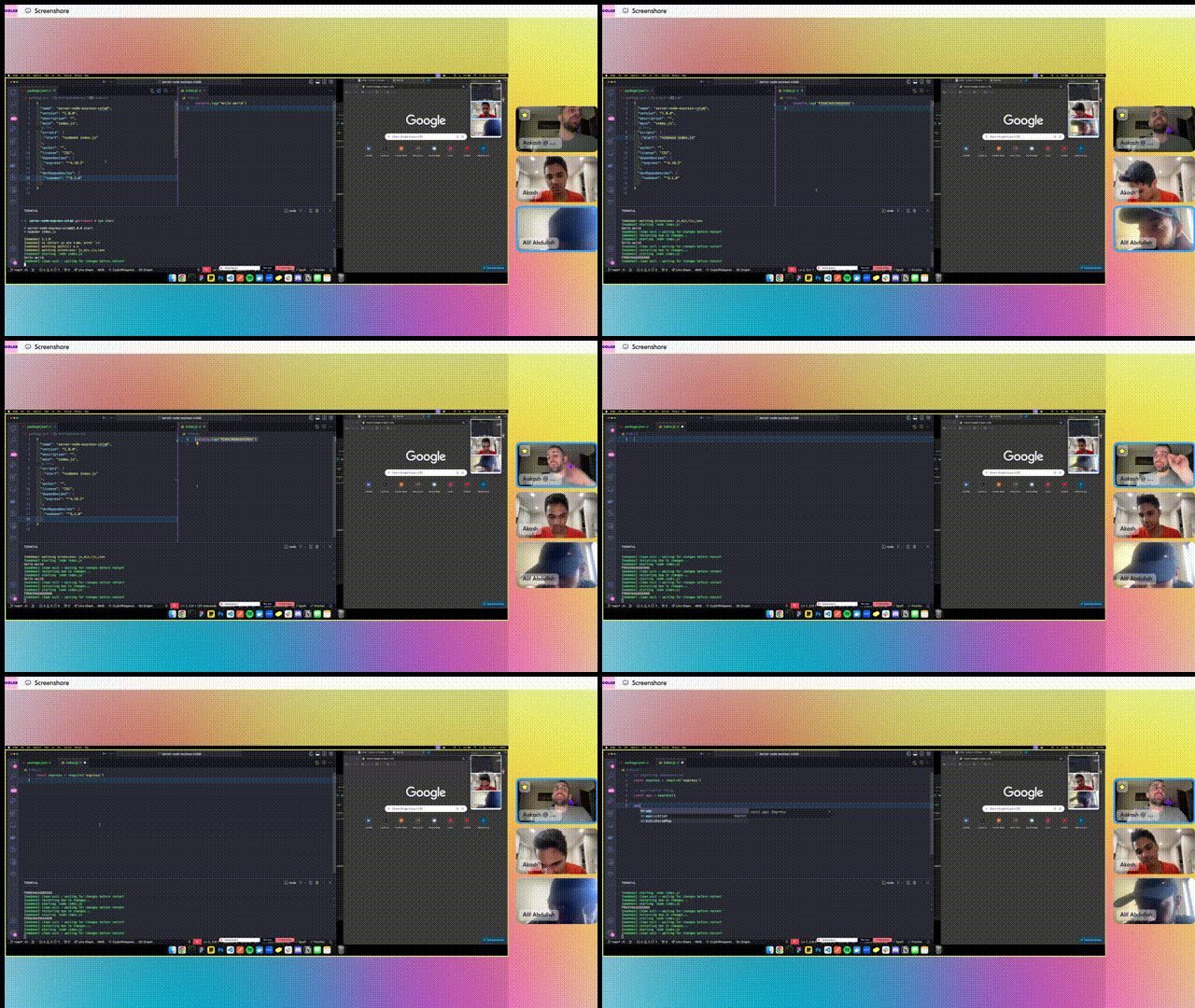
Behind the scenes: screen share of a real debugging moment.


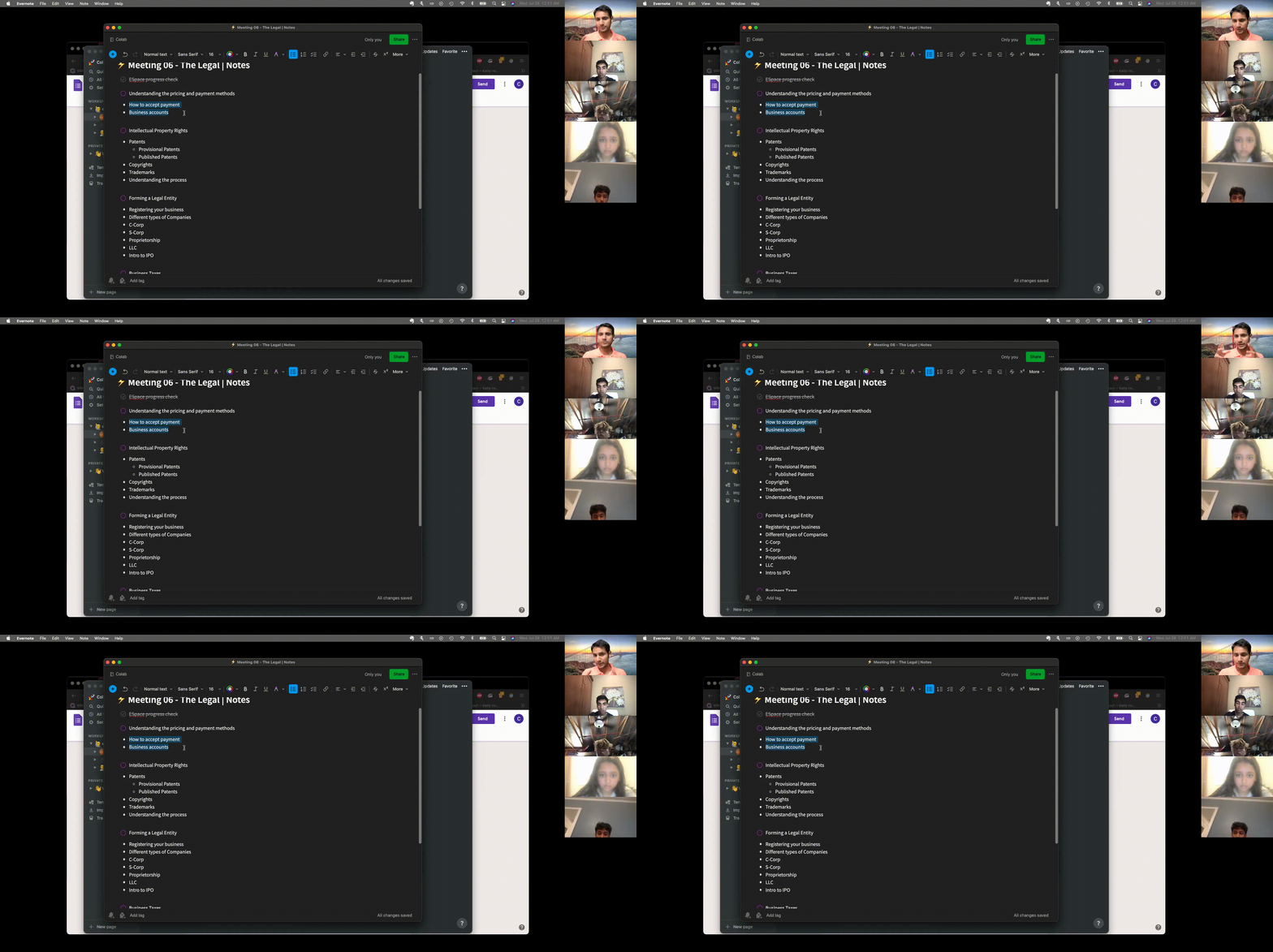
Peer-Swap session: fellows reviewing each other’s work.
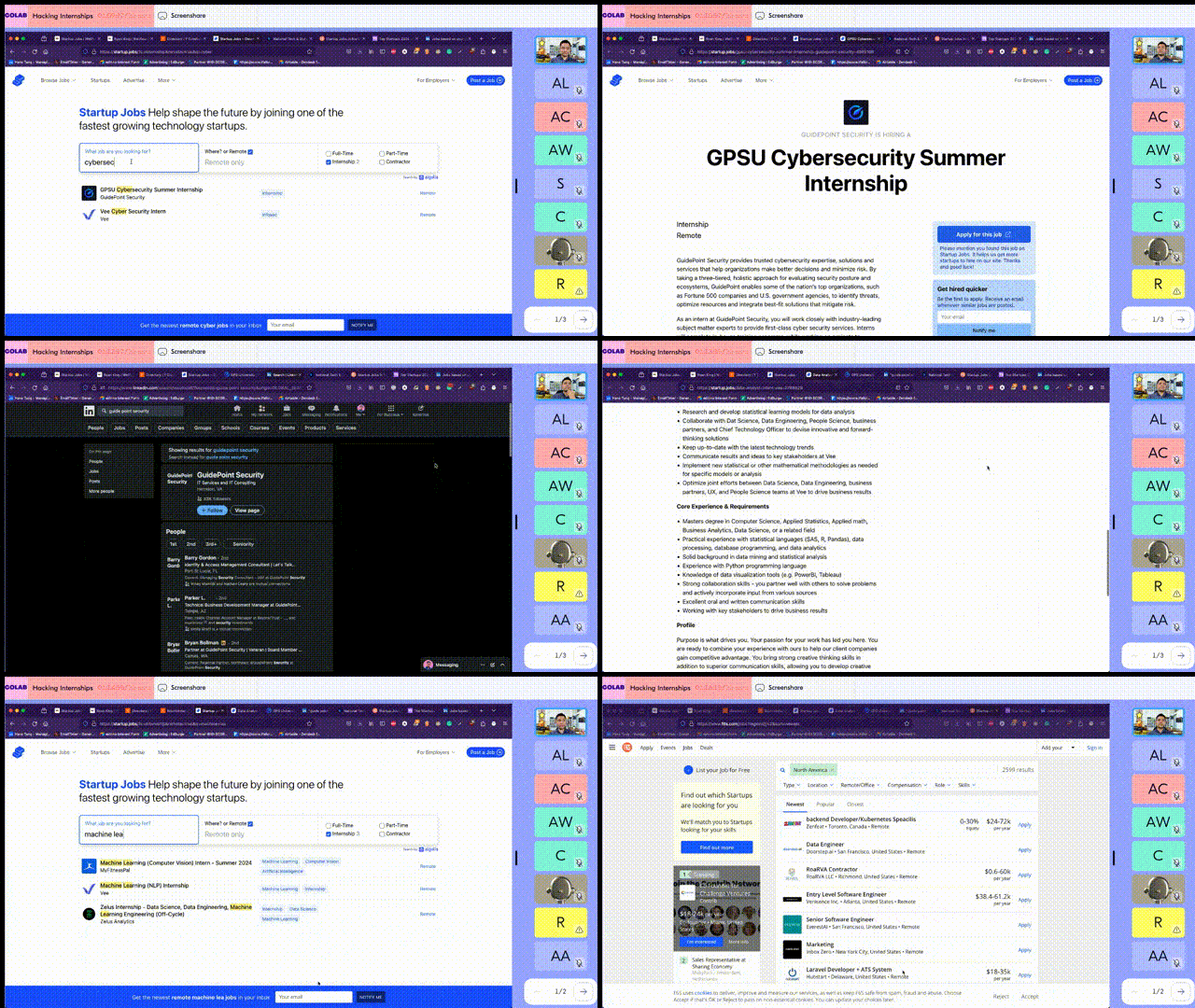
Demo Day room where projects get grilled (in a good way).
Fellows in live standup walking through shipped work.
Behind the scenes: screen share of a real debugging moment.
Peer-Swap session: fellows reviewing each other’s work.
Demo Day room where projects get grilled (in a good way).
The rhythm is simple: build, show work, get corrected.
- Standups to walk through what moved
- Async work tied directly to your goal
- Peer-Swap reviews to unblock faster
- Live correction so the work gets sharper
The question every week is: what moved?
Success is not “I learned a lot.”
- merged PRs
- production work
- first users or traction
- outreach that gets replies
- a stronger answer to “What have you done?”
Something real moved.
That depends on the track, but usually:
- SWE: PRs, commits, features, stronger technical story
- Business / startups: users, live MVPs, traction, sharper signal
- General: demos, receipts, and real examples you can talk through
Not vague effort. Actual proof.
Not through guarantees.
- your work gets stronger
- your story gets clearer
- your proof gets easier to share
- the room sees you execute
- the right people can react to something real
The sprint does not promise outcomes. It makes you more legible to the people who create them.
Yes. Most fellows do.
- Expect 5 to 8 focused hours a week
- Progress matters more than time logged
- Consistency matters more than one intense week
If you can protect real time each week, it works.
We look for seriousness, not polish.
- a specific goal
- signs you have already tried things
- honesty about where you are stuck
- willingness to be corrected
- real hunger for pressure
We are looking for people who will use the room properly.
- 5 to 8 focused hours a week
- visible progress every week
- responsiveness
- honesty when blocked
- willingness to show unfinished work
You do not need to look impressive every week. You do need to stay in motion.
Then we tell you why.
- clarity
- proof
- initiative
- seriousness
- follow-through
If you come back having actually moved, that matters.
This is for people tired of weak signal.
- you have skills, but not enough proof
- you are done mass-applying and hoping
- you would rather ship and get critiqued than hide in tutorials
If you want one serious win you can point to, this is for you.
No.
What we do:
- help you build proof people respond to
- put you in rooms where that proof can be seen
- recommend people we have actually seen execute
You are not buying a job promise. You are buying an environment where it is harder to be ignored.
A small, serious one.
- drafts
- PRs
- outreach
- debugging
- reviews
- correction in real time
This is a working room, not a vibes room.
Usually:
- serious students from strong schools
- fellows across tracks and sprints
- engineers, operators, founders, and builders
- people who care about execution more than performance theater
The point is not prestige. The point is quality.
Shipping features, users, or outreach. Getting corrected live.
Watching lectures, doing assignments, following a fixed track.
Tutorials, LeetCode, scattered projects, mass-applying alone.
PRs, live product, users, or proof that people can actually react to.
Projects and a certificate.
Scattered repos and applications with no single sharp win.
You are expected to show work every week. Disappearing gets noticed.
Deadlines exist, but it is easy to coast in a big group.
Self-imposed. Easy to drop when life gets busy.
8 weeks of focused pressure tied to one goal.
Months of curriculum before anything feels real.
Undefined. Depends how long you keep guessing.
Operators, fellows, reviewers in small rooms.
Instructors, TAs, and classmates in big cohorts.
Mostly the cold internet.
A story and receipts you can reuse for years.
Brand name and certificate if you know how to leverage it.
Depends entirely on whether you manage to ship and get proof.
If this all makes sense and you’re actually ready to sprint:
Request a screening →We’ll ask what you want to prove in 8 weeks.